As the saying goes, ‘Every beginning is difficult’. To help you, we have listed the main questions and tried to answer them briefly and clearly. Welcome to the wonderful world of wool nappies! The FAQ list is definitely not complete, so if there is anything else you would like to know, just ask. Therefore just click here and leave a message.
In the following we will have a look at the following categories:
- Start with wool nappies
- Washing and drying of merino wool covers
- Greasing of wool covers
- Wool nappies materials, sizing and fit
- Wool nappy absorbency
Start with wool nappies
Wool nappies are a natural, breathable, and eco-friendly alternative to disposable nappies. Wool is absorbent, soft, and naturally antimicrobial, helping to keep your baby’s skin dry and comfortable. It also regulates temperature, reducing the risk of diaper rashes, and is biodegradable, making it a sustainable option.
Not at all! Once you understand the basic care routine (washing, lanolizing, and drying), wool nappies are easy to maintain. They offer excellent comfort and performance with minimal maintenance compared to other cloth options.
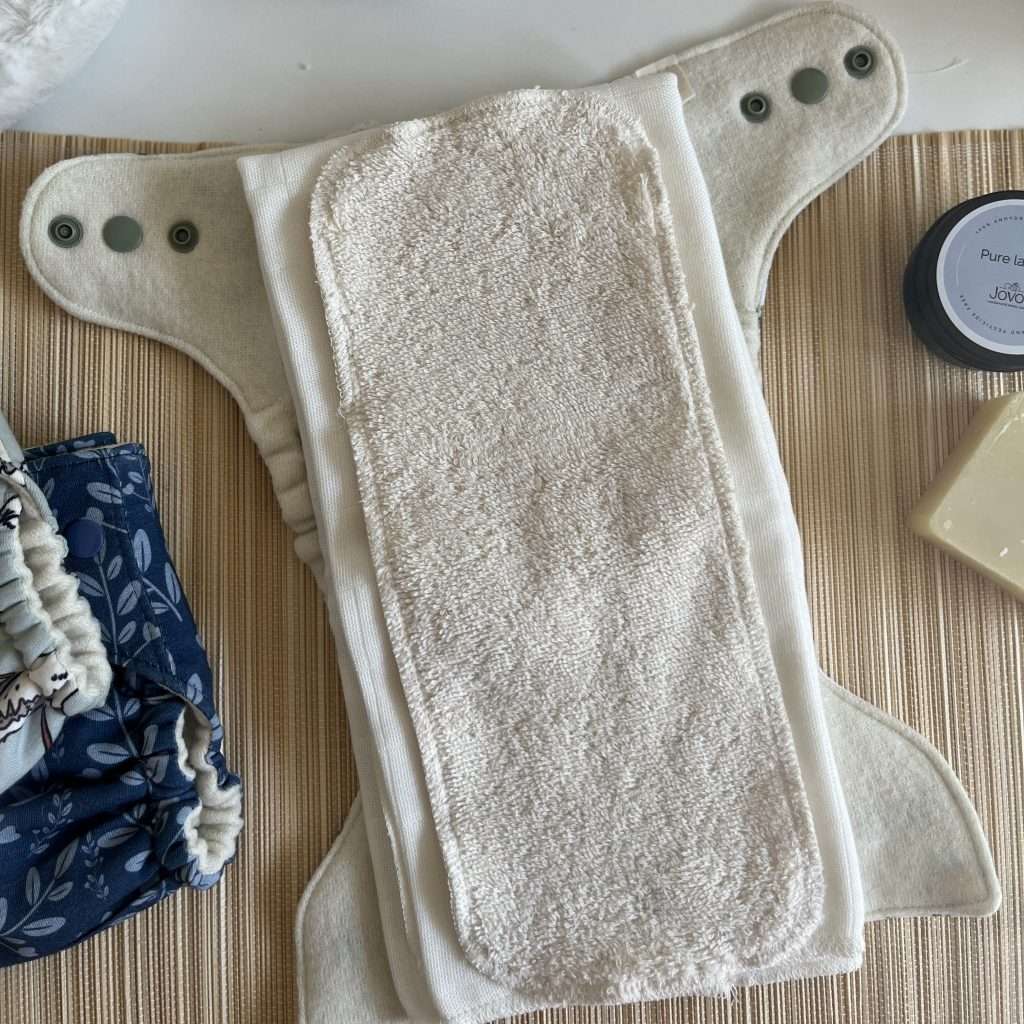
Jovoh wool nappies offer a simple yet sustainable diapering solution, consisting of three key parts: a wool cover, absorbent inserts, and an optional nappy liner. The wool cover, crafted from organic merino wool or a blend of merino wool and cotton, is treated with lanolin to make it water-resistant. You can then pair it with absorbent inserts made from organic cotton and hemp – both of which are natural, chemical-free, and eco-friendly. Additionally, the optional nappy liner helps catch solid waste, preventing it from going into the washing machine.
After use, simply air out the wool cover and wash it approximately every 2 weeks. For the absorbing inserts, machine wash them at 60°C, while you discard the nappy liner after each use. To ensure optimal care, wash the wool cover by hand or on a gentle wool cycle, and dry it flat to preserve its quality and prevent damage.
Want to learn more about how our wool nappy system works? Find all the details and helpful tips here!
To start with wool nappies, you’ll need three main components: a wool cover, absorbing inserts, and optionally a nappy liner. The wool cover is water-repellent due to natural lanolin.
Absorbing inserts, made from organic cotton or hemp, soak up moisture. A nappy liner is optional but helps catch solid poop. You will need the following items:
- Wool covers: At least 3 covers for daytime use. For night-time, you may need extra covers, especially for older children.
- Absorbing inserts: Around 20-25 flats (organic cotton or hemp). You can use hemp boosters for added absorbency.
- Wool care products: Lanolin for greasing the covers, wool washing soap for small stains, and possibly olive soap flakes for deep cleaning.
This is the basic setup for full-time use, but you may want a few extra covers and inserts for more flexibility in your washing routine.
Wool covers don’t need frequent washing; wash them only when soiled. Use a wool-friendly detergent and lukewarm water, then air dry to preserve the wool’s softness and natural oils. Re-lanolize your wool covers regularly to maintain their water resistance and effectiveness.
Yes, wool nappies are suitable for both daytime and nighttime use. For overnight use, it’s recommended to pair them with more absorbent inserts, like hemp, to ensure maximum leak protection throughout the night.

Washing and drying of merino wool covers

In general, merino wool is relatively easy to care for if you consider a few important points: Using a gentle wash cycle, lukewarm water, and a mild detergent, plus air drying, will keep your wool covers in great condition.
Caring for wool nappies is straightforward. You usually clean wool covers every 2 weeks and air them out in between uses. This is possible because of wool’s antibacterial and self-cleaning properties. For deep cleaning, use a mild wool detergent or olive soap. You need a full lanolin bath for major leaks and as a routine approx. every 2 weeks. After cleaning, air-dry the wool cover on a flat surface, avoiding wringing or heat sources. Regular care helps maintain the wool cover’s water-repellent quality.
We have summarised the main steps for washing wool in our blog, and you can find more details under wool nappy care.
Yes, wool covers can be washed using the wool program on your washing machine at a maximum of 30°C. However, hand washing may be more effective for cleaning stains and dirt over time.
It’s best to use a wool-friendly detergent or lanolin soap designed for wool. Avoid regular laundry detergents, as they can strip wool of its natural oils, affecting its softness and water resistance.
Wool covers typically need a full wash every 2-3 weeks. In between, you can air them out after each use due to wool’s self-cleaning and antibacterial properties. Only wash them when they are soiled or start leaking.
if your wool cover becomes heavily soiled (e.g., with poop or excessive urine), it’s okay to wash it more frequently. Best to use a wool washing soap to prevent over-greasing.
For minor stains, you can use lanolin soap to gently scrub the stained area. You can also apply olive soap directly to the stain. If needed, wash the entire cover with lanolin soap for a more thorough treatment.
Even after deep cleaning with soap, discolouration may remain in the wool. This is not a sign of soiling but is similar to annoying fruit stains on your favourite shirt. Fortunately, we can utilise the bleaching power of the sun. Just place your cover with the dirty side facing up and leave the wool outside for some time. However, be careful with intense sun on summer days. Most discolourations are reduced or even disappear completely. Incidentally, this also works really well with the absorbing inserts.
If your wool cover smells or has urine stains, you may need to do a deeper clean. Use olive soap to target stains or a full bath with green soap flakes to remove the deeper contamination. Afterwards grease the wool with lanolin to restore its water-repellent properties.
To dry wool, gently press the water out by rolling it in a towel. Then lay it flat to dry on a rack. Never wring the wool, as it can damage the fibers. Avoid drying it in direct sunlight or on a radiator, as this can cause the wool to become fragile.
Wool covers typically take about a day to dry fully. Drying time may vary depending on the thickness and humidity, but it’s important to let them dry completely before reusing.
Greasing of wool covers
Lanolin is a natural wax derived from sheep’s wool that gives wool its water-repellent properties. It’s essential for keeping wool nappies effective at preventing leaks. You’ll need to re-grease the wool with lanolin every few washes to maintain its effectiveness.
Greasing wool covers is an essential step to make them water-repellent. Therefore, you apply lanolin, a natural fat from sheep’s wool, to restore waterproofing. Grease new wool covers twice, and approx. every 2 weeks once you use them. The process involves soaking the covers in a lanolin emulsion made from lanolin, water, and an emulsifier (such as olive soap). After soaking, gently rinse and dry the cover lying flat on a drying rack. Regular greasing ensures the wool stays water-resistant and maintains its breathability.
In our blog, we will show you how easy it is. With our step-by-step plan, greasing wool covers will be a piece of cake!
Instead of doing a full lanolin bath every time, try using lanolin soap to refresh the wool regularly. This method helps prevent the wool from becoming too greasy while still keeping it water-resistant.
No. Wool grease (lanolin) is not water-soluble because it’s made of fats, which are hydrophobic (repel water). Soap works because it has molecules with a hydrophobic tail that binds to the grease, allowing it to be washed away with water.
Yes, it actually does. This is not a bad thing and even caring for baby’s skin. In fact, many care products contain lanolin! We have never experienced stains on clothes and recommend rinsing the wool pants with water after greasing and then letting them dry well.

Wool nappy materials, sizing and fit
1. What is the main difference?
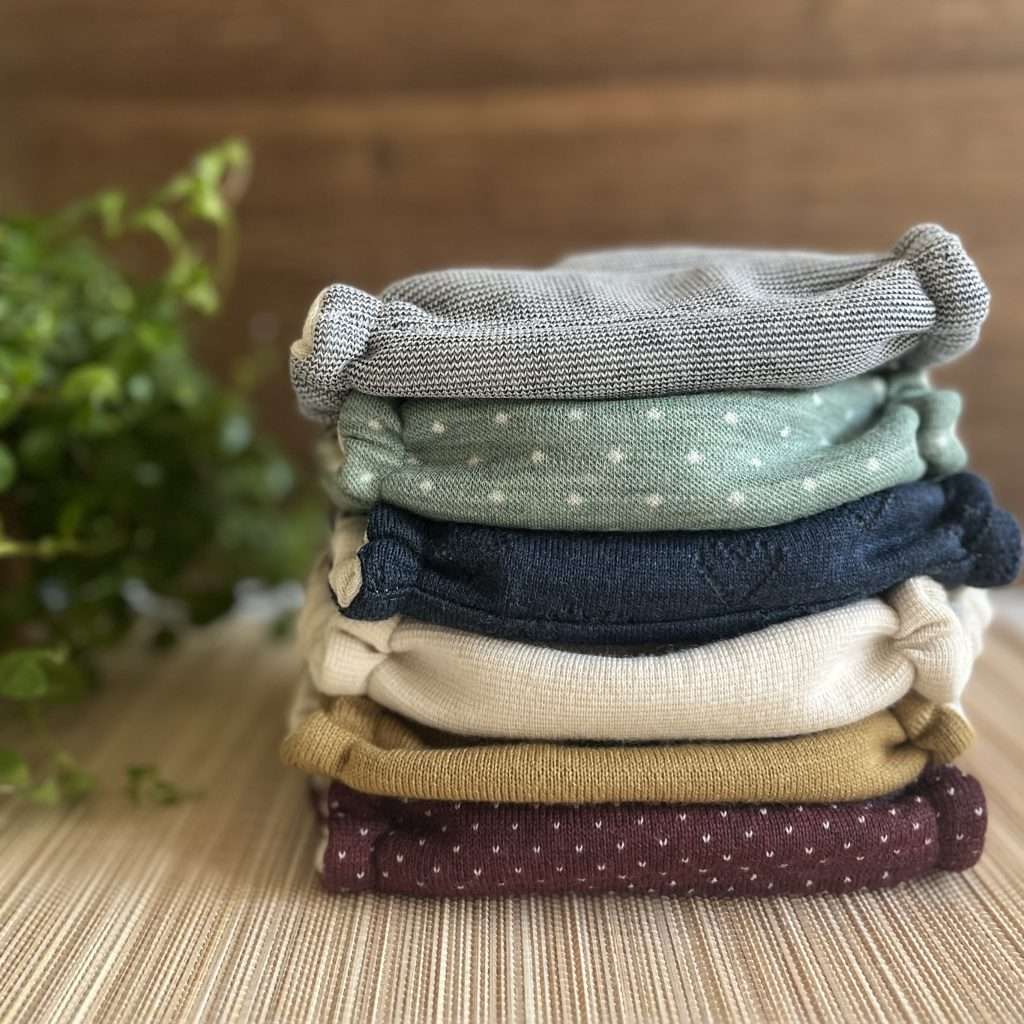
The main difference is in the construction. A 100% wool cover has two layers of wool (both lining and outer), while a wool/cotton cover has one layer of wool (lining) and cotton on the outside. This affects leak protection.
2. Does the material affect the level of leak protection?
Yes, the 100% wool cover generally offers better leak protection because of the extra layer of wool. This can be especially useful for nighttime use or for children who pee a lot or are often carried in a sling.
3. How does washing frequency and maintenance compare?
Wool covers need less frequent washing due to wool’s natural resistance to moisture and dirt. Cotton, on the other hand, absorb moisture more easily and requires more frequent washing. 100% wool covers also resist odour better and are easier to maintain. However, the difference is only marginal and both types can be used in a similar washing rhythm.
4. Which is better for nighttime use?
The 100% wool cover is generally a better choice for nighttime, thanks to the extra layer of wool, which provides added leak protection.
5. Can both types of covers be used with the same absorbent inserts?
Yes, both types of covers work with the same absorbent inserts. The main difference is how the materials handle leakage and maintenance.
Jovoh wool nappies are available in three sizes:
- Size 1 (approx. 4-7 kg)
- Size 2 (approx. 7-12 kg)
- Size 3 (approx. 11-16 kg)
While these sizes are based on weight, it’s important to note that the fit will vary depending on your child’s stature. For example, a child with a smaller build may fit into a larger size later on, while a more robust child might need to size up sooner.
What shall I do when the weight of my child is in between sizes?
Here too, the key question is whether your child is slimmer or stronger. For very slim children with thin legs, the smaller size is probably advisable. In all other cases, please note that the next larger nappy size can probably be worn for longer. And that is certainly important. If you are unsure, please ask us!
What if my child is slender?
Sizes 1 and 2 both feature an extra snap on one of the wings, allowing slimmer children to transition easily from one size to the next, giving a more customised fit.
Jovoh wool nappies are made from stretchy merino wool and optionally cotton fabrics, which makes them flexible and easy to fit over absorbent inserts. However, the area around the tummy, where the snaps are located, is not stretchy. This design ensures the cover stays in place without slipping, offering a secure fit and keeping moisture from escaping.
Yes, Jovoh offers absorbent inserts suitable for newborns. The multi-size system ensures a good fit, and the soft, breathable wool is gentle on delicate newborn skin.
Furthermore, our size 1 wool covers have extra snaps on the front. This allows the nappy to be adjusted at the legs so that it also fits slender newborns.
Yes! While the wool cover is key to preventing leaks, it’s essential to use the right number and type of absorbent inserts for optimal performance. You can pair your wool cover with flats, prefolds, or muslin nappies, depending on your baby’s needs.
By choosing the right size and pairing it with suitable absorbent inserts, you can ensure that your baby stays comfortable, dry, and leak-free throughout the day and night!
A properly fitted wool nappy should fit snugly around the waist and legs without causing discomfort or pinching. If it’s too tight, it may cause chafing, and if it’s too loose, it may lead to leaks. Ensure the snaps are adjusted to a comfortable fit.
Wool nappy absorbency
An absorbing insert is a piece of absorbent fabric that is placed inside a cloth nappy cover to absorb moisture. The type of insert you use depends on your baby’s needs, such as how much they pee and how often you change their nappy. Inserts come in various materials, with organic cotton and hemp being the most common due to their absorbency and natural qualities.
For breastfed babies, the poop will dissolve in water, so the inserts can go straight into the washing machine. For older babies with solid stool, you can use disposable or washable nappy liners to catch the mess and dispose it in the bin.
Jovoh offers a variety of inserts made from organic cotton and hemp. These include:
- Muslin Nappy: Great for newborns, offering a foldable option.
- Cotton Flat: Versatile and can be folded in multiple ways for different sizes and ages.
- Hemp Flat: Ideal for heavy wetters, it absorbs moisture slowly but can hold more liquid.
- Cotton Liner: A soft, quick-absorbing top layer.
- Hemp Booster: Provides extra absorbency, great for overnight or long stretches.
- Prefold: A pre-layered insert combining cotton and hemp, easy to use and highly absorbent.
- Wool Liner: Can be used as a moisture barrier or to reduce wetness against the skin, depending on how it is treated.
The right insert depends on your baby’s age and how much they pee:
- For Newborns: Cotton inserts like muslin nappies or cotton flats are usually sufficient.
- For Older Babies: As your baby pees more, you may need to introduce hemp-based inserts (such as hemp flats or boosters) for increased absorbency.
- For Nighttime: Hemp inserts, with a cotton liner on top, are ideal for overnight use as they offer maximum absorbency.
Yes! Hemp inserts are highly absorbent but absorb moisture slowly, so it’s best to use them with a cotton layer on top. The cotton absorbs moisture quickly and passes it onto the hemp insert for long-lasting absorbency.
If a wool nappy becomes too wet, it’s important to change it promptly to avoid leaks. Wool nappies are designed to handle moisture over a period of time, but they should be paired with the appropriate absorbent inserts to ensure maximum protection.
Cloth inserts are generally easy to care for:
- Wash: Most inserts are machine washable, but be sure to follow care instructions for specific materials (especially for wool).
- Drying: It’s best to air-dry inserts or use a gentle tumble dry setting for cotton-based ones. Wool should be laid flat to dry.